Yes, a strict cancellation policy can cost you bookings
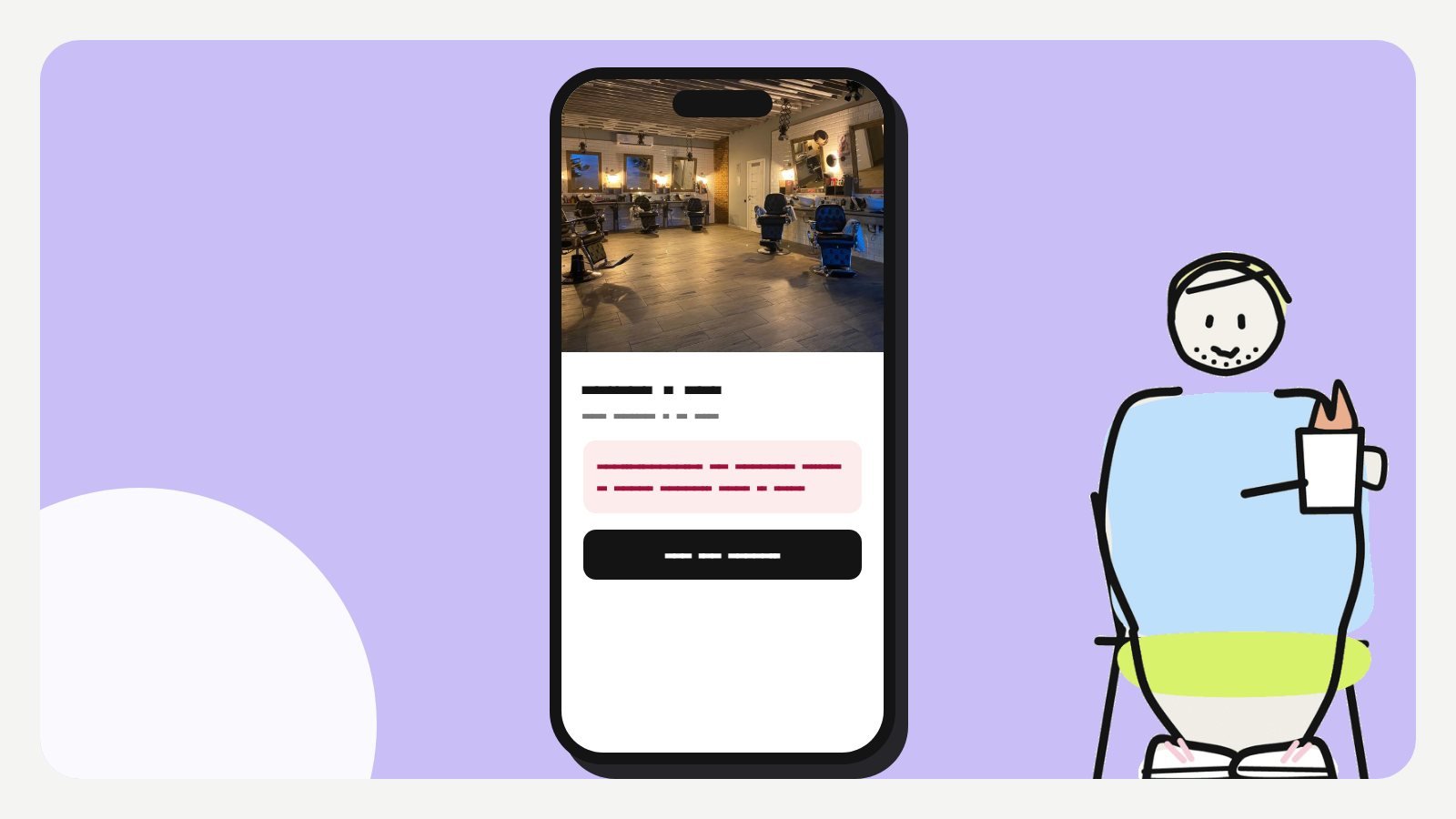
Plenty of small hotels and guest houses set a strict cancellation policy because it feels like the safe choice.
The research points the other way. In a study of more than 500 US hotels published in 2023, moderate cancellation policies went with better financial performance than either the most lenient or the most stringent ones.
This piece goes through what the studies of hotels and Airbnb found, what a flexible rate is worth in money, and how to write a cancellation policy in plain words. The number to hold on to is 10% to 15%, the price gap hotels on Booking.com kept between their refundable and non refundable rooms in a study of about 25 million room listings.
Flexible guests do cancel, and how often depends on where they booked. In the 2026 HOTREC European Hotel Distribution Study, hotels reported an average cancellation rate of 9.1% for bookings made on their own website, against 19.0% for Booking.com and 11.7% for Expedia.
Finally, it checks your own wording against one test. Could a guest repeat your policy after reading it once?
Does a strict cancellation policy put guests off?
Often it does, and the clearest evidence comes from Airbnb
When Airbnb made every booking fully refundable for 48 hours after it was made, Airbnb listings got higher prices and higher occupancy. That is the finding of a working paper by Jian Jia, Ginger Zhe Jin and Liad Wagman for the US National Bureau of Economic Research, using data on Airbnb and VRBO listings in ten US cities. NBER working papers are circulated for discussion and have not been peer reviewed, and the paper says so on its first page.
A guaranteed way out made guests more willing to book. The rule took some risk off the guest, and on the paper's numbers, Airbnb listings did not lose out on price or occupancy for it. Not every host liked it, and the authors found some hosts also listed on VRBO and lowered their service quality on Airbnb.
Hotel research found the same pull towards leniency. Chih-Chien Chen, a hospitality researcher at the University of Nevada, Las Vegas, tested different combinations of penalty fees and cancellation deadlines and how they changed guests' booking choices, in a study published in the International Journal of Hospitality Management. In the university's write up of that work, the main takeaway was that guests are drawn to hotels with a more nuanced and more lenient approach than the old one size fits all rule.
Guests also value flexibility most when the stay is far away. A 2024 master's thesis at the University of Delaware, by Yuqing Gong, found that leisure travellers were more willing to pay for lenient cancellation terms further from the check in date, and that the value fell within 30 days of arrival. It is a thesis, not a peer reviewed paper, so I treat it as a pointer, not proof.
Is the strictest cancellation policy the most profitable?
No, the research points to the middle
A moderate cancellation policy beat both extremes in a study of more than 500 US hotels. Mehmet Altin, Chih-Chien Chen, Arash Riasi and Zvi Schwartz looked at two parts of each hotel's policy, the penalty and the cancellation window, which is how long before arrival a guest can still cancel. Their paper in Tourism Economics found that moderate policies were likely to produce better financial performance than more lenient or more stringent ones, and the data matched their mathematical model.
Hotels have been tightening the deadline more than the penalty. A 2019 paper by Riasi, Schwartz and Chen in the Journal of Revenue and Pricing Management found hotels experimenting with stricter cancellation windows, while the penalties themselves did not appear to get stricter. In plain words, hotels asked guests to decide earlier, but did not charge them much more for changing their mind.
I would copy that shape, with a clear deadline and a fair penalty the guest sees before paying.
What is a flexible rate worth?
Hotels on Booking.com charged roughly 10% to 15% more for the right to cancel
A refundable room costs more than a non refundable one, and the gap barely shrinks as the stay gets closer. Nicola Lacetera, Claudio Piga and Lorenzo Zirulia collected about 25 million room listings from around 3,500 hotels on Booking.com, in cities in France, the UK, the US and Canada. Their paper in the Journal of Economics and Management Strategy found the price gap between the refundable and non refundable rate stayed at roughly 10% to 15% of the full price, with little change as check in approached.
The authors' explanation is that some guests overestimate how likely they are to cancel. Those guests will pay extra for flexibility they probably will not use, and a hotel that offers both rates lets each guest pick. The paper also argues that offering both rates can expand the market and, in some cases, leave guests better off too.
Booking.com gives hotels the same advice, and it has a commercial interest in you selling more rooms. The paper opens with a line from Booking.com's partner pages telling hotels they could be missing out if they do not offer both a non refundable and a fully flexible rate plan.
So the choice is rarely strict or flexible. It is two rates side by side. A flexible rate at your normal price, and a non refundable rate that is cheaper, with the gap set by you.
Why do guests cancel more on Booking.com than on your own website?
Hotels report about twice as many cancellations on Booking.com as on their own websites
Hotels in the 2026 HOTREC study reported a 19.0% cancellation rate on Booking.com and 9.1% on their own websites. HOTREC is the European hotel trade association, and the study was run with the University of Applied Sciences and Arts of Western Switzerland. These are averages of what the responding hotels reported, not audited platform data.
The highest Booking.com cancellation rates were at big city hotels, not small rural ones. The study profiles the hotels with high Booking.com cancellation rates as large, four and five star, urban and chain hotels with heavy platform dependence. Small hotels in small towns, mountain and seaside places showed up among the low cancellation profiles.
A cancellation on a platform can still cost you commission. Booking.com's own partner FAQ says that if a guest cancels and your policy has no free cancellation, you pay commission on the amount the guest pays you. That is one more reason to make your own website the easy place to book, which I cover in why nobody is booking your small hotel online.
How do I word a cancellation policy guests will read?
Use one rule, written in dates and money, placed next to the price
A guest should be able to repeat your cancellation policy after one read. If they need to work out what "72 hours prior to 14.00 local time" means, they will either guess wrong or book somewhere that says it simply.
Write it as a date, an amount and a method. Say you run a four room B&B. This table shows the same policy written two ways.
| Hard to read | Plain words |
|---|---|
| Cancellations within 7 days of arrival incur a charge of 100% of the first night | Cancel free until 7 days before you arrive. After that, we keep the cost of your first night. |
| Refunds processed per our terms | We refund to the card you paid with within 5 working days. |
| Non refundable rates are non refundable | This rate is cheaper and cannot be cancelled or refunded. |
| No shows charged in full | If you do not arrive and do not tell us, we charge the full stay. |
The right hand column uses only words a guest would say out loud. Use your own deadline, amount and refund time, not mine.
Show the actual date on the booking page once the guest picks their dates. "Free cancellation until Friday 4 December" beats "7 days before arrival", because nobody has to count. Most booking engines can do this for you.
Put the policy beside each rate, not only in your terms page. A guest compares two rates at the moment they choose one, so that is where the rule has to be.
Make any cancellation insurance optional and unticked. In the US, the Federal Trade Commission's guidance on its fees rule uses the example of a hotel offering optional trip protection online and says it must be a box the guest chooses to tick, not one already ticked. Pre ticked extras also show up in the UK rules on pricing, which I go through in hidden fees at checkout.
Do not hide the policy until the payment page. A guest who meets a strict rule for the first time on the last screen feels caught out, even if the rule is fair.
My pick
Offer two rates and a moderate rule. A flexible rate at your normal price with free cancellation until a clear deadline before arrival, and a non refundable rate that is cheaper by an amount you can live with. The research above suggests the strictest rule is not the money maker it looks like, and that guests will pay for flexibility.
Then test it the simple way. Read your cancellation policy out loud to someone who has never seen your website and ask them what happens if they cancel the week before. If they cannot tell you, rewrite it.
If you want a second pair of eyes on your whole booking page, Roast reads it the way a guest does and tells you in plain words what is putting people off. That includes the policy, the price and the payment step. The free preview shows your score and top three problems, the pricing page shows the rest, and you can see what we check first. Your roast is never published or shared.
Find out what is putting your customers off.
Sources
Research on cancellation policies
- Mehmet Altin, Chih-Chien Chen, Arash Riasi and Zvi Schwartz, Go Moderate! How Hotels' Cancellation Policies Affect their Financial Performance, Tourism Economics 29(8), 2023, pages 2165 to 2182, https://stars.library.ucf.edu/ucfscholar/1259
- Jian Jia, Ginger Zhe Jin and Liad Wagman, Platform as a Rule Maker, Evidence from Airbnb's Cancellation Policies, NBER Working Paper 28878, June 2021, revised October 2022, https://www.nber.org/papers/w28878
- Nicola Lacetera, Claudio A. Piga and Lorenzo Zirulia, Sticky price for declining risk? Business strategies with behavioral customers in the hotel industry, Journal of Economics and Management Strategy 34, 2025, pages 250 to 273, https://doi.org/10.1111/jems.12593
- Arash Riasi, Zvi Schwartz and Chih-Chien Chen, A paradigm shift in revenue management? The new landscape of hotel cancellation policies, Journal of Revenue and Pricing Management 18(6), 2019, pages 434 to 440, https://ideas.repec.org/a/pal/jorapm/v18y2019i6d10.1057_s41272-019-00189-3.html
- University of Nevada, Las Vegas, To Book or Not to Book?, news article on Chih-Chien Chen's research, 17 November 2016, https://www.unlv.edu/news/article/book-or-not-book
- Yuqing Gong, The impact of booking lead time on hotel customers' willingness to pay for more lenient cancellation terms, master's thesis, University of Delaware, 2024, https://udspace.udel.edu/items/890306df-1687-4dda-973d-768ef95fd32d
Industry data
- HOTREC, European Hotel Distribution Study 2026, reference year 2025, cancellation rates on page 110, https://www.hotrec.eu/media/static/files/import/all_news_2026_2026_35/full-study_european-hotel-distribution-study-2026_hotrec.pdf
- Booking.com, partner FAQ (the company's own page), https://join.booking.com/faq.html
Rules
- US Federal Trade Commission, Rule on Unfair or Deceptive Fees, frequently asked questions, https://www.ftc.gov/business-guidance/resources/rule-unfair-or-deceptive-fees-frequently-asked-questions